
DMSO Lotion: What Is It, and Does It Really Exist?
If you’ve been searching for DMSO lotion, you may have noticed something strange. There are plenty of DMSO liquids, gels,
Free U.S. shipping · Spend $125+ for a free DMSO Roll-On
DMSO is a stable compound, but it still needs to be stored correctly to maintain its purity and effectiveness. If you’ve ever opened your DMSO bottle to find it frozen solid, or noticed it developing an off smell, storage conditions are probably the culprit.
I’ll explain how to store DMSO and why each of these factors actually matters.
Pure DMSO freezes at 65°F (18.3°C). Most liquids we deal with freeze well below room temperature, but DMSO is different.
If you store your DMSO anywhere that gets below 65°F – a garage, basement, unheated room, or even near a cold window in winter – it will freeze. You’ll open the bottle and find a crystalline solid instead of liquid.
Frozen DMSO isn’t ruined. Freezing doesn’t damage DMSO or reduce its purity. Just place the bottle in warm (not hot) water for a few minutes and it’ll return to liquid form. The quality is completely unaffected.
Some people actually prefer to keep their DMSO in solid form because it’s easier to see if there are any impurities (they won’t crystallize the same way). But for practical use, liquid is more convenient.
Store DMSO at normal room temperature (68-75°F) and it stays liquid and stable.
DMSO slowly breaks down when exposed to light, especially UV light. The breakdown produces dimethyl sulfide, the compound that gives DMSO its characteristic sulfur smell. More light exposure means more breakdown, which means stronger odor and slightly reduced purity over time.
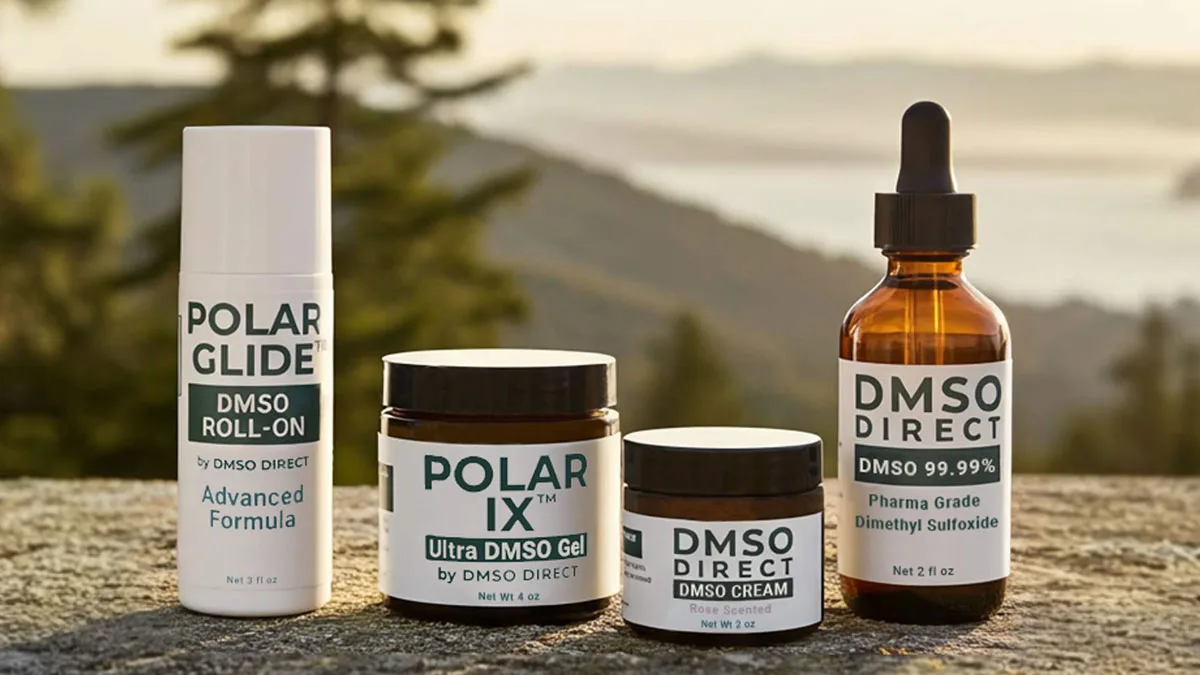
We package all of our 99.99% pure liquid DMSO products in amber glass bottles. The amber color filters out UV light and most of the visible light spectrum that causes degradation. Clear glass would allow light to pass through and speed up the breakdown process.
If you have DMSO in clear glass, store it in a dark place. A cabinet, drawer, or any location away from direct light works. Minimizing light exposure is what matters.
Amber glass doesn’t block all degradation, but it slows it down significantly. You don’t have to worry as much about light when pulling it out of storage for use. Proper storage away from bright light sources keeps DMSO stable for years.
DMSO is a powerful solvent. It will dissolve or degrade many common plastics, leaching chemicals from the container into your DMSO. This is a serious purity issue.
You can safely store DMSO in glass (any type), polypropylene (PP) plastic, HDPE (high-density polyethylene) plastic, LDPE (low-density polyethylene) plastic, PTFE (Teflon), and stainless steel.
You need to avoid PVC (will leach plasticizers), PET/PETE (common water bottle plastic), polystyrene, most rubber and latex, and painted or coated containers (DMSO will strip the paint/coating right off).
We use polypropylene for some of our gel jars because it’s chemically inert with DMSO. It won’t leach, won’t degrade, and maintains the purity of the product.
A note about droppers: Many droppers use rubber bulbs, which DMSO will break down over time. This is why our dropper bottles use glass droppers with silicone bulbs. Silicone is DMSO-compatible and won’t degrade. Some droppers also have measurement markings that are painted on – and DMSO can strip the paint off.
Stored properly, DMSO has a very long shelf life.
Pure DMSO liquid has an indefinite shelf life when stored correctly. DMSO doesn’t go bad the way most products do. The main concern is accumulation of dimethyl sulfide (the breakdown product), which increases odor but doesn’t significantly affect the solvent properties.
Some manufacturers put expiration dates on their bottles. This is generally a guarantee of purity until that time, or until the DMSO is opened, but it may also be indicating that packaging materials, mostly the seals in the cap will only keep the product air tight for so long.
Our DMSO gels can last 2-3 years when stored properly. The DMSO itself is stable, but the other ingredients (aloe, gelling agents) can slowly degrade. We make our formulations in small batches to ensure freshness.
Degrading DMSO will have a stronger than usual sulfur smell, change in color (pure DMSO should be clear), visible particles or cloudiness, or separation in blended products.
If your DMSO develops a very strong odor, it’s likely been exposed to too much light or has been stored for an extremely long time. It’s still usable as a solvent, but the odor might be off-putting.
Every time you open a bottle of DMSO, you expose it to air. Oxygen and moisture in the air can slowly react with DMSO, contributing to the formation of dimethyl sulfide.
We sell our DMSO in 2 oz and 4 oz amber glass bottles to reduce air exposure. Larger bottles will take longer to use up and will have significantly more air exchange, which can lead to degradation when people are only using small amounts daily.
For normal use, this isn’t something to worry about. Opening your bottle once a day or even multiple times a day isn’t going to cause significant degradation. These are very slow chemical processes.
Just don’t leave the cap off for extended periods, close the bottle promptly after use, and don’t transfer DMSO to multiple containers unless necessary (more containers means more air exposure).
The best place to store DMSO is somewhere with stable temperature and low humidity. A bedroom closet or kitchen cabinet works well. Bathrooms aren’t ideal since humidity and temperature fluctuate.
Keep DMSO away from direct sunlight and bright light sources. Amber glass provides good protection, but windowsills and areas with constant bright light can still cause gradual degradation over time.
If you’re diluting DMSO or making custom blends, use DMSO-compatible containers (glass, polypropylene, or HDPE). Standard plastic containers will leach chemicals into your DMSO.
Make sure caps are tight after each use. DMSO is hygroscopic, meaning it attracts moisture from the air. A loose cap allows moisture in and can affect purity.
Store DMSO at room temperature in a cool, dry location. Avoid storing near heat sources like heaters or stoves.
Sometimes we get asked about spray bottles and it’s a bit more complicated than people realize. A regular plastic spray bottle might seem convenient, but if it’s not polypropylene or HDPE, the DMSO will leach chemicals from the plastic. Even if you find a bottle that is the correct type of plastic and with stainless steel springs, most people forget to consider the seals. Without seals the pump sprayer would leak. And, the trouble is in finding a spray bottle with DMSO compatible seals.
DMSO is sold for use as a solvent. You might find DMSO sold in spray bottles, but chances are the company didn’t consider the seals either, unfortunately. Most seals are made from rubber which can degrade and leach into the DMSO.
Some people ask if they should refrigerate DMSO. You can, but you don’t need to.
Refrigeration slows any chemical degradation even further, and some people prefer using cold DMSO. But there are downsides. Pure DMSO will likely freeze (remember that 65°F freezing point). Our gels like Polar IX™ won’t freeze since they’re diluted to 60-70% DMSO, which significantly lowers the freezing point.
The main concern with refrigeration is moisture. Condensation can form on the bottle when you take it out of the fridge, and the humidity inside refrigerators can introduce moisture if caps aren’t perfectly tight. DMSO is hygroscopic (attracts moisture), so this is something you want to avoid.
Room temperature storage is perfectly fine. Refrigeration doesn’t provide enough benefit to justify the moisture risk.
Store at room temperature (above 65°F so it doesn’t freeze, but not hot). Keep it in amber glass or opaque containers to protect from light. Only use DMSO-compatible materials (glass, polypropylene, HDPE). Keep the cap tight when not in use.
DMSO is stable, forgiving, and will maintain its quality for years when stored properly.
If you’re using one of our products, the packaging is already designed for proper storage. Just keep the bottle in a cabinet or drawer, and you’re good to go.
DMSO Direct products are sold for use as a solvent. They are not intended to diagnose, treat, cure, or prevent any medical condition.
If you’ve been searching for DMSO lotion, you may have noticed something strange. There are plenty of DMSO liquids, gels,
Important Regulatory Information Our DMSO is sold exclusively for use as a solvent. It is not intended for human consumption,