
DMSO Safe Handling Guide: 99.99% Pure Pharma-Grade Dimethyl Sulfoxide
Important Regulatory Information Our DMSO is sold exclusively for use as a solvent. It is not intended for human consumption,
Free U.S. shipping · Spend $125+ for a free DMSO Roll-On
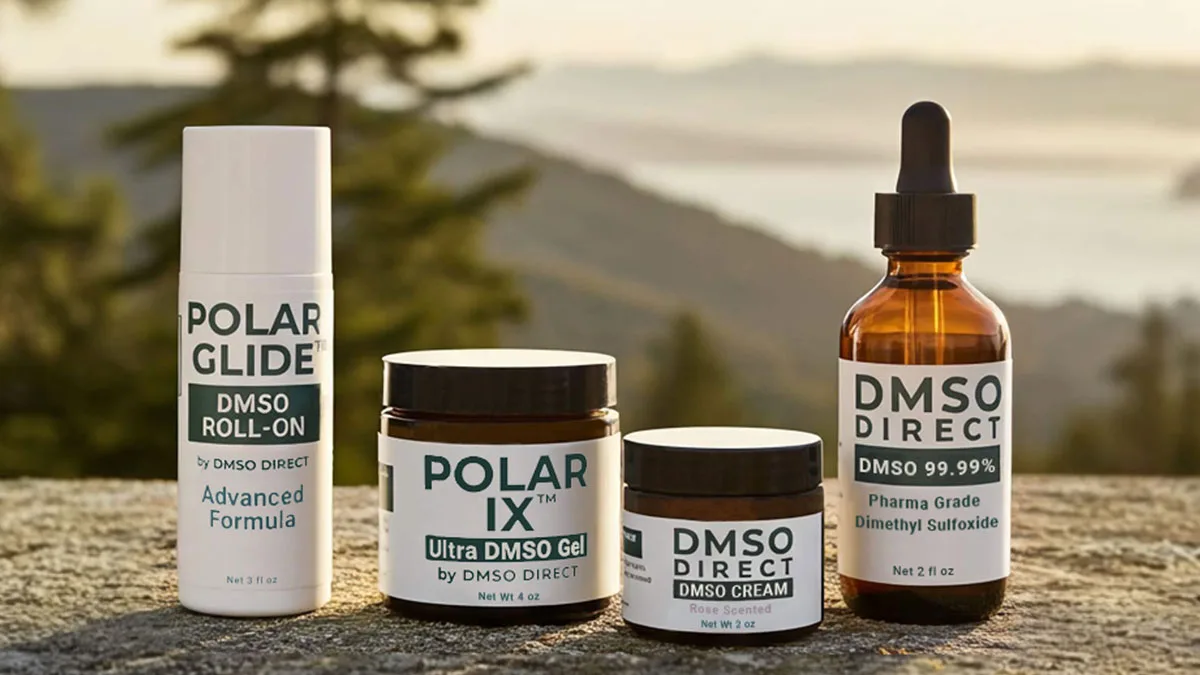
If you’ve been searching for DMSO lotion, you may have noticed something strange.
There are plenty of DMSO liquids, gels, creams, and even roll-ons. But finding something actually called “DMSO lotion” isn’t nearly as easy.
So, where’s the lotion?
Is it a real product, or are people simply using different names for the same thing?
Let’s clear up the confusion.
You’ve probably used both, but have you ever stopped to think about what makes them different?
The simplest answer is thickness.
A lotion is generally thinner and flows more easily. A cream is thicker and tends to hold its shape.
Think of pouring lotion from a bottle versus scooping cream from a jar.
Both can contain similar ingredients, including water, oils, and other components. The difference often comes down to how they’re formulated.
And here’s something interesting: a cream doesn’t necessarily contain more oil than a lotion. Its consistency depends on the ingredients and how they’re combined.
Technically, there’s no reason a lotion couldn’t contain DMSO (dimethyl sulfoxide).
But “DMSO lotion” isn’t a consistently defined product category, and products marketed under that exact name appear to be relatively uncommon.
DMSO itself is a versatile solvent widely used in laboratory, industrial, and chemical applications.
Although DMSO products come in different forms, their consistency or packaging doesn’t determine their intended use or regulatory approval.
And while lotion, cream, and gel might sound like interchangeable names, the formulations behind them can be quite different.
Sounds simple enough, right?
Not quite.
DMSO is a powerful solvent that mixes readily with water. Traditional lotions, however, often contain both water and oils, along with ingredients that help everything stay mixed.
Adding DMSO can change how those ingredients behave together.
Creating a stable DMSO-containing lotion requires careful consideration of ingredient compatibility, consistency, and long-term stability.
In other words, mixing DMSO into ordinary lotion doesn’t automatically create a properly formulated DMSO lotion.
One thing we’ve learned while developing DMSO formulations is that achieving the right consistency takes more than simply choosing between a liquid, cream, or gel. Each ingredient can influence how the finished product behaves.
Interestingly, our own rose-scented DMSO cream starts with a gel-based formulation rather than a traditional oil-and-water cream.
It’s a good example of why the name on the container tells only part of the story.
DMSO gels typically contain thickening ingredients that give them their familiar gel-like consistency.
Roll-ons are a little different.
The term “roll-on” describes the applicator, not necessarily the formulation inside.
A roll-on bottle uses a rotating ball to dispense its contents in a controlled manner.
For example, DMSO Direct’s Polar Glide™ is a 60% DMSO formulation featuring aloe vera, urea, and high-molecular-weight hyaluronic acid, packaged in a 3 oz roll-on bottle.
It’s not marketed as a lotion, but it illustrates how DMSO formulations can take different forms.
For a closer look at the differences between two common formats, see our article on DMSO Gel vs. DMSO Liquid.
Not necessarily!
Words like lotion and cream naturally bring skin-care products to mind. But those names alone don’t establish a product’s safety, intended use, or regulatory approval.
As the FDA explains, a product’s intended use is an important factor in determining how it is regulated.
DMSO-containing products can differ considerably in their ingredients, concentrations, and intended purposes.
At DMSO Direct, our products are sold strictly for use as solvents, not for cosmetic or medical applications. They are not intended for human or veterinary use.
That’s why understanding a product’s ingredients, specifications, and intended use is more important than relying on its name alone.
Yes and no.
A product name can give you an idea of its consistency, but it doesn’t necessarily tell you much about what’s inside.
When evaluating DMSO formulations, a few things are worth checking:
It’s also important to distinguish between the purity of the DMSO ingredient and the concentration of DMSO in the finished product.
For example, a formulation made with 99.99% pure DMSO doesn’t necessarily contain 99.99% DMSO in the finished product.
They’re two very different measurements.
The answer isn’t quite as mysterious as it first appears.
DMSO-containing lotions are possible, but products specifically marketed as “DMSO lotion” appear to be less common than liquids, creams, and gels.
And while these terms sometimes get used loosely, they don’t necessarily describe identical formulations.
The takeaway? Don’t judge a DMSO product by its name alone.
Its ingredients, concentration, formulation quality, and intended use tell a much more complete story.
At DMSO Direct, we specialize in high-quality DMSO and carefully developed formulations, including liquids, gels, creams, and our Polar Glide™ DMSO Roll-On.
Our focus is on ingredient quality, formulation consistency, and thoughtful packaging.
All DMSO Direct products are sold strictly for solvent use only and are not intended for human or veterinary use.
Discover Polar Glide™ DMSO Roll-On
For additional information about responsible solvent handling, visit our DMSO Safe Handling Guide.
Important Regulatory Information Our DMSO is sold exclusively for use as a solvent. It is not intended for human consumption,
DMSO is a stable compound, but it still needs to be stored correctly to maintain its purity and effectiveness. If